How to get your non-profit in the media: 5 tips

Laura Joe - de Bruine
You might sometimes think media attention is reserved only for larger non-profits and companies with lots of money, fame or a huge network. But nothing could be further from the truth in this digital age. Journalists are regularly looking for real stories. And online it's even easier to find people — stories that resonate, inspire, surprise or spark recognition. And you don't necessarily need a big marketing budget for that. I noticed that myself too.
This year on EenVandaag, Vriendin and Metro, among others
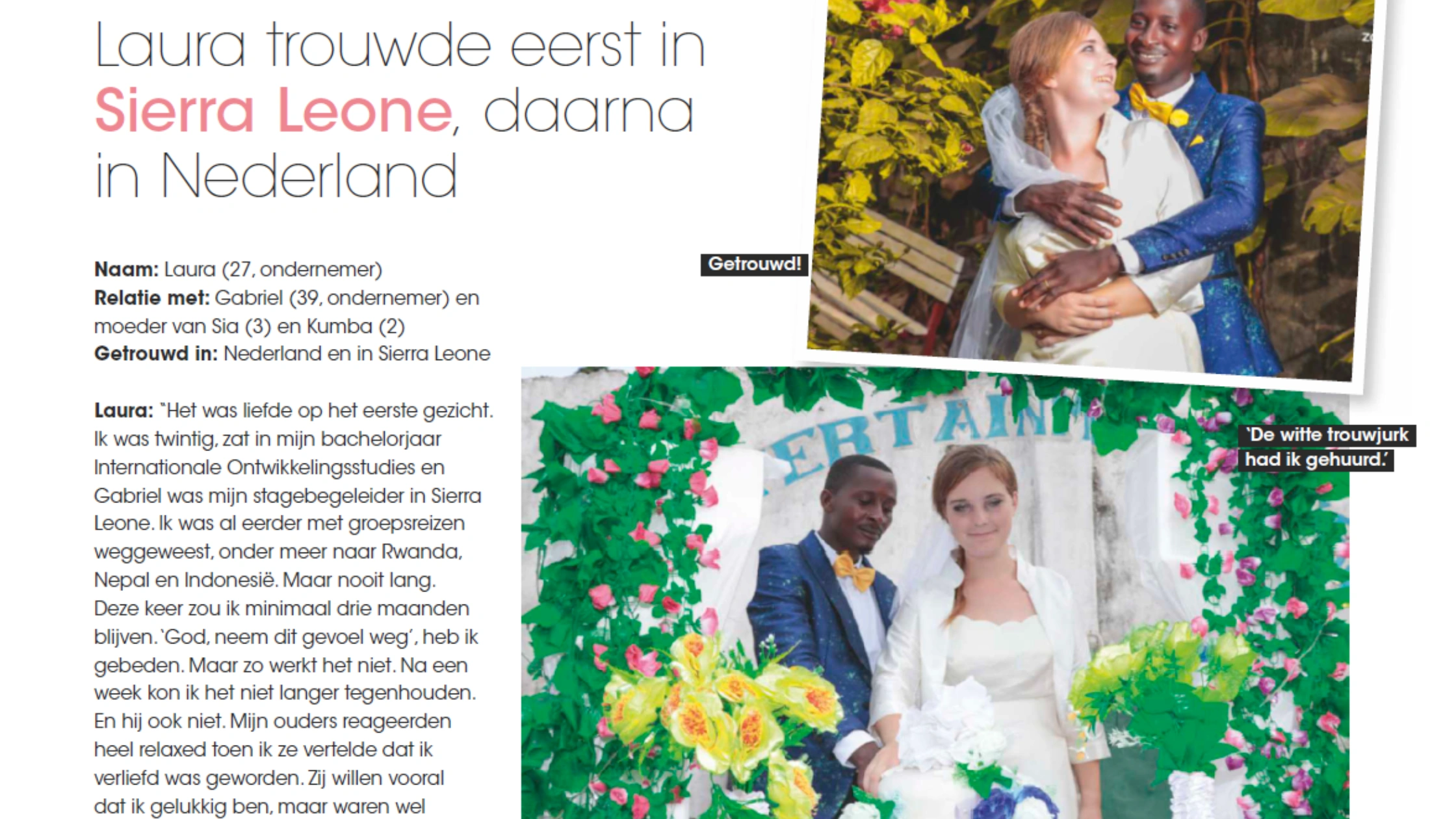
Earlier this year, my husband was featured on EenVandaag regarding the fireworks ban, following my LinkedIn post with almost 40,000 impressions. A gossip channel then made a critical video about it that lived up to its name (which I won't link here). Let's just say negative attention is still attention. Last month I appeared in Vriendin (p. 35) with my personal story about getting married in Sierra Leone and the Netherlands. The articles weren't directly about Your Digital Home, websites or online fundraising, but they did lead many people to start following us. Last month I also appeared in Metro, where I got to talk directly about my business.
How did I get into the media?
Our company is almost 2 years old. We don't have a big budget. So how did I end up in the media so often?
First of all, during the first six months of our business I posted on social media (mainly LinkedIn) 10 times a week. Now it's still 5 times a week. That makes me very visible and lets me test well what works. I don't just post about my work, but also about cultural differences, my vision, my experiences and other things on my mind. That way people increasingly know who I am, what I stand for and which stories fit me. If you try to sell directly, you often put people off. Did you know it works the same way if you ask directly for donations? It's good to first bring people further into your story.
EenVandaag approached me directly earlier this year following a LinkedIn post. That post did very well, with almost 40,000 impressions. It was written straight from the heart and deliberately not too polished. Those posts often do best. I also regularly get tagged in posts by journalists looking for people for an article. That's how I got tagged in a post by a journalist from Vriendin and Metro Nieuws (I recently wrote an article about it, which you can find here). I then contacted the journalists and indicated I was open to an interview. Not because I hired a big PR agency or had large advertising budgets. Not because I had a ready-made media plan. But because I'm visible, dare to share my story, get tagged, and respond when an opportunity comes along.
It also helps that I build a lot of network and partnerships. For example, I give webinars together with Partin, we're a supplier for Goede Doelen Nederland, and we write articles for Vakblad Fondsenwerving. I like giving away a lot of value and connecting with people. The partnerships with Partin, Goede Doelen Nederland and Vakblad Fondsenwerving create new networks.
How can your non-profit get into the media?
Many non-profits have wonderful stories. The only problem is those stories often stay within the organisation.
I often hear staff and volunteers of non-profits say:
"Is this even interesting enough?"
"Are people even waiting for this?"
"Aren't we too small for the media?"
"Shouldn't we be bigger or more professional first?"
But it's precisely small and medium-sized non-profits that often have strong, human stories. They're directly connected to the impact — stories of founders, volunteers, donors, participants or people who were helped. A journalist usually isn't looking for a sales pitch. A journalist is looking for an authentic story. And that's exactly what many non-profits are good at.
What makes a story interesting for the media?
A good media story doesn't have to be perfect. It also doesn't always have to be spectacular. Above all, it has to be real. Think, for example, of:
- a personal story from the founder
- a special reason the organisation was founded
- a volunteer who was moved by the work
- a donor with a personal reason to give
- a project that shows what's concretely changing
- a social development you can speak to
- an experience that fits a bigger theme in society
At EenVandaag it was about the fireworks ban and my Sierra Leonean husband's view on it. In my story in Vriendin it was about getting married in two countries. At Metro Nieuws it was about entrepreneurship, charity and Africa. Two completely different angles, but both personal and relatable. That's exactly what media is often looking for — something that makes people think.
5 tips to get your non-profit into the media
1. Be consistently visible
Media attention usually doesn't start the moment you send a press release. It starts much earlier, by being visible. Post regularly on LinkedIn, Instagram, Facebook or other channels where your audience is active. Share not just what you do, but also why you do it. Talk about people, choices, doubts, successes and lessons. The more often people see you pass by, the greater the chance they'll think of you when there's a fitting opportunity. People often need several touchpoints before they trust you and reach out.
2. Network and respond to others
Visibility isn't just about posting yourself. It's also about using and expanding your network well, and responding is useful there. Respond to journalists, editors, fundraisers, entrepreneurs and people from your sector. Not pushy, but genuine. Add something to the conversation. Share your experience. Ask a question. Give a substantive response. That way you slowly become more and more visible.
3. Take the plunge
Don't always wait for someone to ask you. Do you see a journalist writing about a theme that touches your non-profit? Send a friendly message. Not with a standard sales pitch, but with a concrete angle.
For example: "In practice we see more and more young people struggling with this. If you're ever looking for a personal story or a practical example on this, we'd be happy to help." That's approachable, helpful and relevant.
4. Think in stories, not organisations
Many non-profits want to talk about their organisation. But media usually prefer a human story.
So ask yourself:
Who was touched by our work?
Who can tell this personally?
What makes this story special?
Why is this relevant right now?
That's where your story begins.
5. Make it easy for journalists
Journalists often work with deadlines. The easier you make it for them, the greater the chance they'll do something with your story.
So make sure you can quickly provide:
- a short explanation of your non-profit
- a clear angle
- contact details
- good photos
- someone available for an interview
- concrete examples or figures
You don't need everything perfectly ready. But do be reachable, clear and helpful.
Your story deserves to be seen!
My article in Vriendin was personal. It was about my marriage, my family and my bond with Sierra Leone. Yet it shows something bigger to me. Visibility arises when you dare to share. That applies to me as an entrepreneur. But just as much to your non-profit. You don't have to wait until you're big enough. You don't have to wait until everything is perfect. You can start by sharing the stories that already exist. Because maybe a journalist is looking for exactly a story like yours.
Want to discover which story your non-profit can tell?
At Your Digital Home we help non-profits with online visibility, social media, websites and fundraising. But it always starts with the same question:
What's the story people need to hear? What makes you unique?
Want to explore that together? Feel free to contact us. We're happy to think along with you.